Welcome! From Smithandgk

Marine Life
Explore our beautiful Australian Marine Life with us
Humpback Whales
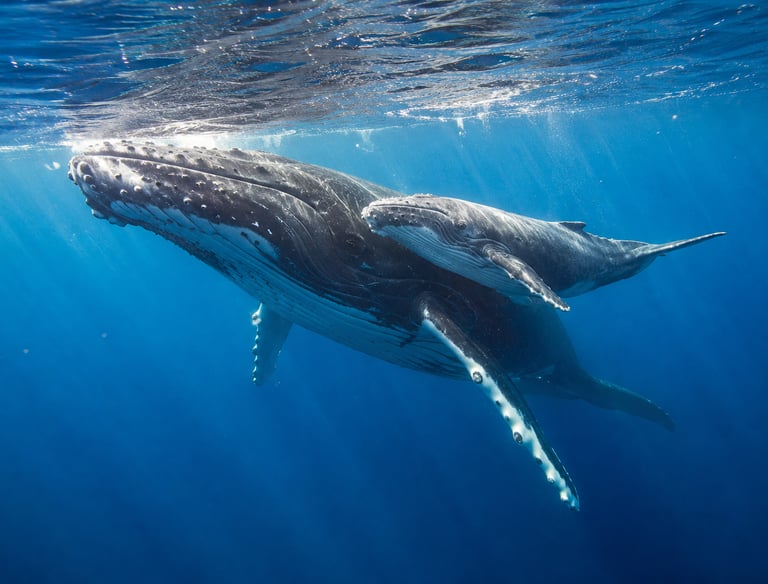
Humpback whales are one of the most incredible marine animals to visit the Whitsundays each year. Thousands of humpback whales migrate along the Queensland coastline from Antarctica to the warm tropical waters of North Queensland to breed, give birth, and raise their calves. The Whitsundays and nearby Bowen region are considered one of Australia’s best whale migration corridors, with calm protected waters providing a safe environment for mothers and calves.
Humpback Whale Season in the Whitsundays
The Whitsundays whale season generally runs from June to September, with peak sightings usually occurring between July and August.
June: Early migration begins as whales travel north from Antarctica.
July – August: Peak season with frequent sightings of mothers, calves, escorts, and active males.
September: Many whales begin their southern migration back toward Antarctic feeding grounds.
During the season, visitors often see:
Breaching
Tail slapping
Spy hopping
Singing males
Mothers swimming closely with calves
Dolphins travelling alongside whales
Why the Whitsundays Are Special for Whale Watching
The warm tropical waters around the Whitsundays provide ideal nursery conditions for new born calves. Unlike colder southern waters, the calm sheltered bays help young whales conserve energy while learning to swim and breathe.
Popular whale-watching areas include:
Bowen
Airlie Beach
Hook Island
Whitehaven Beach
Gloucester Passage
Interesting Facts About Humpback Whales
Adult humpback whales can grow up to 16 metres long.
They can weigh over 30 tonnes.
Male humpbacks produce complex songs that can travel for kilometres underwater.
Calves can drink up to 500 litres of milk per day.
Humpbacks migrate one of the longest distances of any mammal on Earth.
The annual humpback migration through the Whitsundays is one of the most breath taking natural events in Australia and a major highlight for photographers, fishers, and ocean lovers exploring North Queensland.
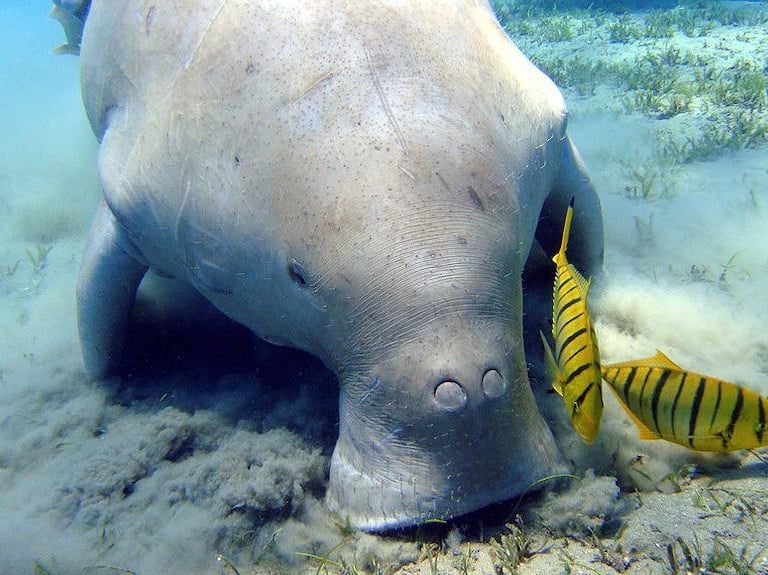
Dugongs
Dugongs of Bowen & the Whitsundays
The waters surrounding Bowen and the Whitsundays are home to one of Australia’s most unique and gentle marine mammals — the dugong. Often called the “sea cow,” dugongs are peaceful ocean grazers that spend most of their lives feeding on seagrass meadows found in shallow coastal waters throughout North Queensland.
Bowen’s protected bays, clear tropical waters, and healthy seagrass beds make the region an important habitat for dugongs. They are commonly spotted cruising slowly through calm waters, surfacing quietly for air, or travelling with calves close beside their mothers.
Interesting Dugong Facts
Dugongs are marine mammals related to elephants.
They can grow up to 3 metres long and weigh over 400 kilograms.
Dugongs are the only fully marine herbivorous mammal in the world.
Their diet mainly consists of seagrass found in shallow coastal waters.
Dugongs can stay underwater for around 6 minutes before surfacing to breathe.
Mothers are extremely protective of their calves, often keeping them close for up to two years.
Dugongs are slow-moving and gentle animals known for their calm nature.
They are believed to have inspired ancient mermaid legends from sailors long ago.
Dugongs in Bowen Waters
The coastline around Bowen contains extensive seagrass habitats that support dugong populations year-round. Areas throughout the Whitsundays and nearby coastal inlets are recognised as important dugong feeding grounds. Calm weather conditions sometimes make it possible to spot their distinctive backs or tail movements near the surface.
Dugongs are protected in Australia because their populations can be threatened by:
Boat strikes
Habitat loss
Net entanglement
Water pollution
Damage to seagrass meadows from cyclones and runoff
Protecting seagrass habitats around Bowen and the Whitsundays is essential for the survival of dugongs and many other marine species that depend on healthy coastal ecosystems.
Why Dugongs Are Special
Seeing a dugong in the wild is considered a rare and unforgettable experience. These shy marine animals are an iconic part of North Queensland’s ocean wildlife and play an important role in maintaining healthy seagrass ecosystems throughout the Coral Sea region.
The tropical waters of Bowen and the Whitsundays remain one of the best places in Australia to appreciate the beauty of dugongs in their natural environment.
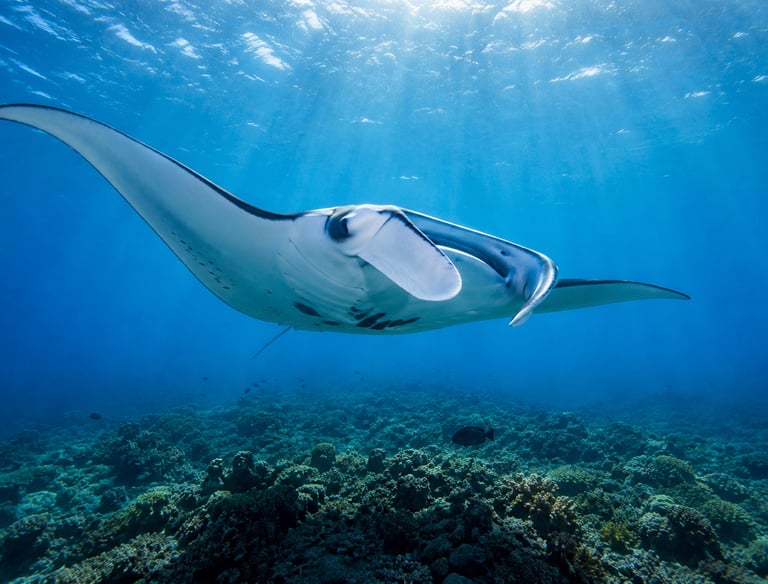
Manta Rays of Bowen & the Whitsundays. The tropical waters surrounding Bowen and the Whitsundays are home to one of the ocean’s most graceful and fascinating creatures — the manta ray. Gliding effortlessly through the warm waters of the Coral Sea, manta rays are known for their enormous wingspan, gentle behaviour, and breath taking underwater movements.
Manta rays are often seen around reefs, island passages, and nutrient-rich waters throughout the Whitsundays region where plankton is abundant. Divers, snorkelers, and boaters occasionally witness these incredible animals performing barrel rolls while feeding or soaring through the water like underwater birds.
Interesting Manta Ray Facts
Manta rays are the largest species of ray in the world.
Some manta rays can reach wingspans of over 7 metres.
Despite their huge size, manta rays are harmless to humans.
They do not have stingers like stingrays.
Manta rays feed mainly on tiny plankton and small fish.
They use their large cephalic fins near their mouths to help funnel food while swimming.
Manta rays are highly intelligent and have one of the largest brain-to-body ratios of any fish species.
They are known to recognise individual humans and display curious behaviour around divers.
Manta Rays in Bowen & Whitsunday Waters
The warm tropical waters around Bowen and the Whitsundays provide excellent conditions for manta rays, especially near coral reefs and offshore islands. Sightings are more common during warmer months when plankton levels increase in the region.
Manta rays are often spotted around:
Hook Island
Hayman Island
Hardy Reef
Gloucester Passage
Offshore reef systems throughout the Coral Sea
Why Manta Rays Are Important
Manta rays play an important role in maintaining healthy marine ecosystems and are considered an iconic species of the Great Barrier Reef region. Their presence is often a sign of healthy ocean conditions and thriving plankton populations.
Like many marine animals, manta rays face threats from:
Plastic pollution
Boat strikes
Fishing gear entanglement
Habitat degradation
Cyclone impacts on reef ecosystems
Fishing gear entanglement
Magical Ocean Encounter Swimming beside a manta ray is often described as one of the most unforgettable experiences in the ocean. Their calm movements, enormous size, and peaceful nature make them one of the most awe-inspiring marine species found in North Queensland waters.
The crystal-clear waters of Bowen and the Whitsundays continue to offer incredible opportunities to witness these majestic creatures in their natural environment.
Manta Ray
Subscribe to our newsletter Below
Keep up with all our news!
Smithandgk
Sign up for our latest news also follow our social media links thank you!
Contact
Newsletter
Thanks for joining us! We dont spam we'd rather be on the ocean!
smithandgk@gmail.com
© 2026 SmithandGK Web Design